Emergency plumbing advice

How to turn off your water in the event of a leak

A practical guide for Portsmouth, Southsea and nearby homes: find the right valve, stop the water where you can, and know who to call next.

Reviewed by Pompey Plumb Ltd. Last reviewed 24 June 2026.

  1. Turn off the internal stop tap if it is safe to reach.
  2. Use a nearby isolation valve for one tap, toilet or appliance.
  3. Open the cold kitchen tap to release pressure.
  4. Keep away from wet electrics and ceilings holding water.
  5. Call for help if the valve is seized, hidden or still leaking.

Find the right shutoff

Start with the valve that matches the leak

Main stop tap

Usually under the kitchen sink, in a hallway cupboard, utility room, downstairs toilet or where the water pipe enters the property.

Local isolation valve

Best for one leaking tap, toilet, dishwasher, washing machine or outside tap. It avoids turning off the whole home.

External stopcock

Often in a pavement, front path or boundary chamber. Some properties do not have a working internal stop tap, so this may be the best place to turn the water off.

Flat or shared supply

Look in the flat, meter cupboard or service riser. Avoid shutting off a shared supply unless you are sure it is the right valve.

Photo guide
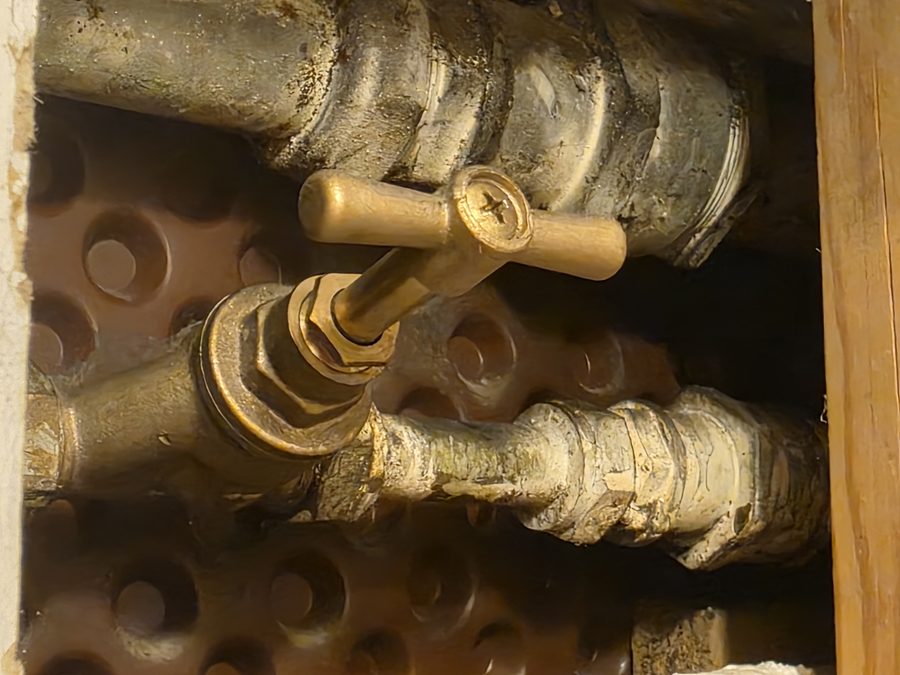
Common valves you may see

Traditional internal stop tap in a cupboard

Traditional internal stop tap

Turn clockwise gently to close. Do not force it if the handle or spindle feels seized.
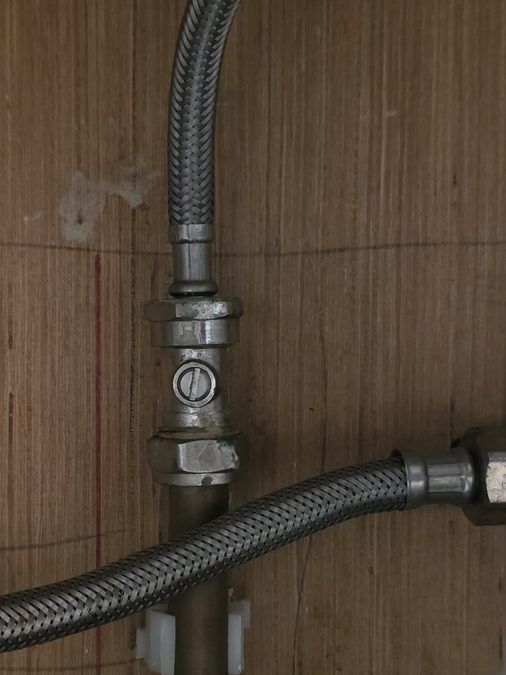
Slotted isolation valve open with slot in line with pipe

Isolation valve open

The slot is in line with the pipe. Water can pass through this valve. Use a flat-head screwdriver if there is no handle.
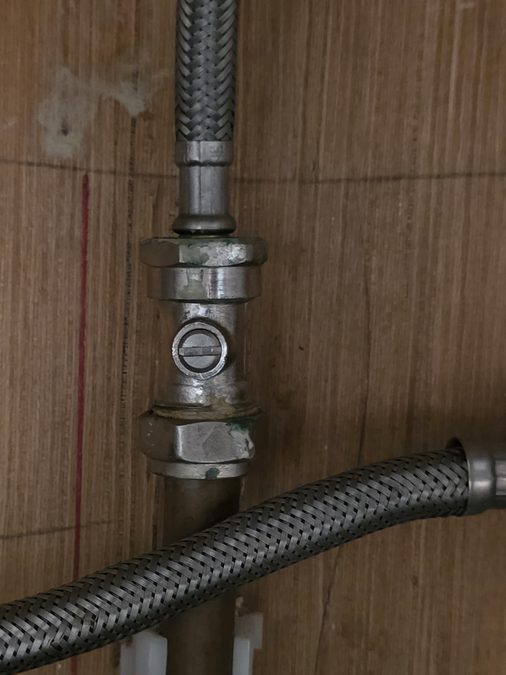
Slotted isolation valve closed with slot across the pipe

Isolation valve closed

The slot is across the pipe. This is the usual off position for a quarter-turn valve. Turn it a quarter turn with a flat-head screwdriver.
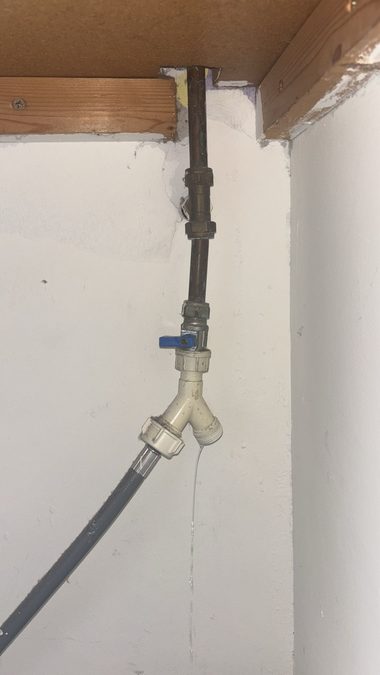
Washing machine valve dripping under a cupboard

Broken appliance valve

This valve is leaking and should not be relied on to isolate the appliance. Use the upstream stop tap or main stop tap, then get it replaced.
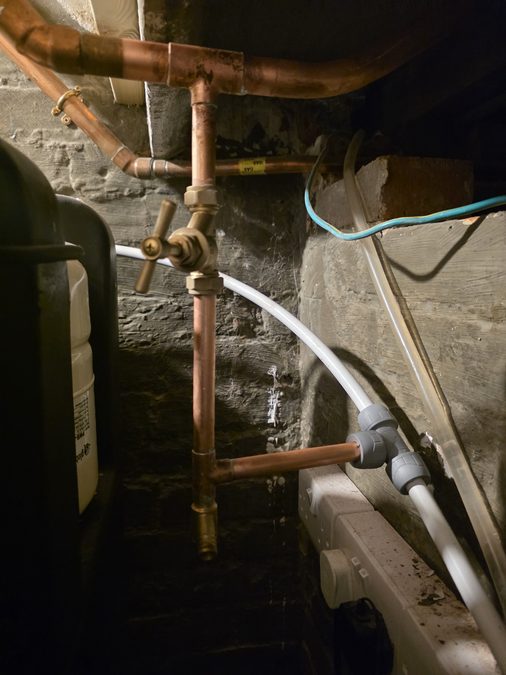
Internal stop tap on bypass pipework in an under sink cupboard

Stop tap on older pipework

Some Portsmouth and Southsea homes have older or altered pipework. If unsure, take a photo before touching anything.
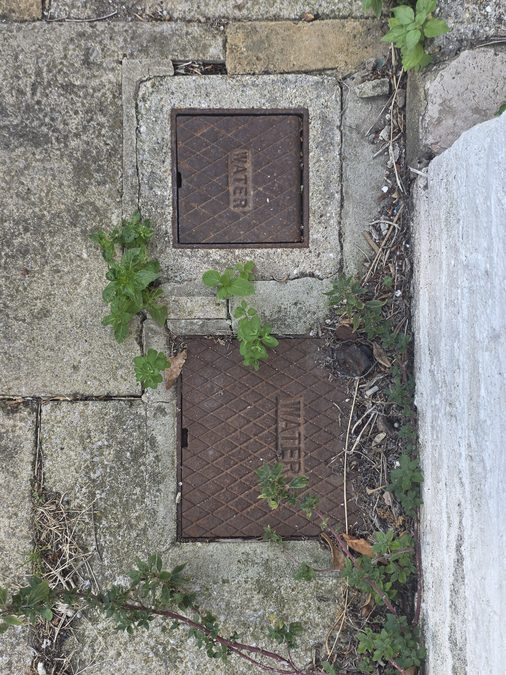
Two external water stop tap covers in paving

External water covers

These may hide stop taps or meters. They can be stiff, dirty, shared or not the right supply.
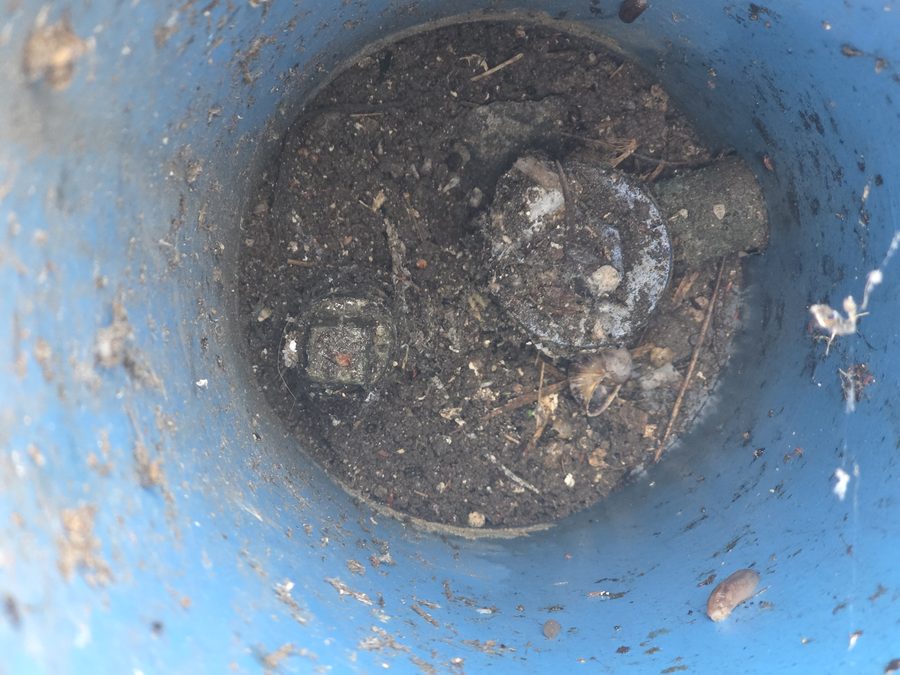
External stopcock chamber showing square headed valve

Deep external stopcock

A chamber like this may need a stop tap key. If it will not turn or will not fully shut off the water, contact the water company as an emergency.
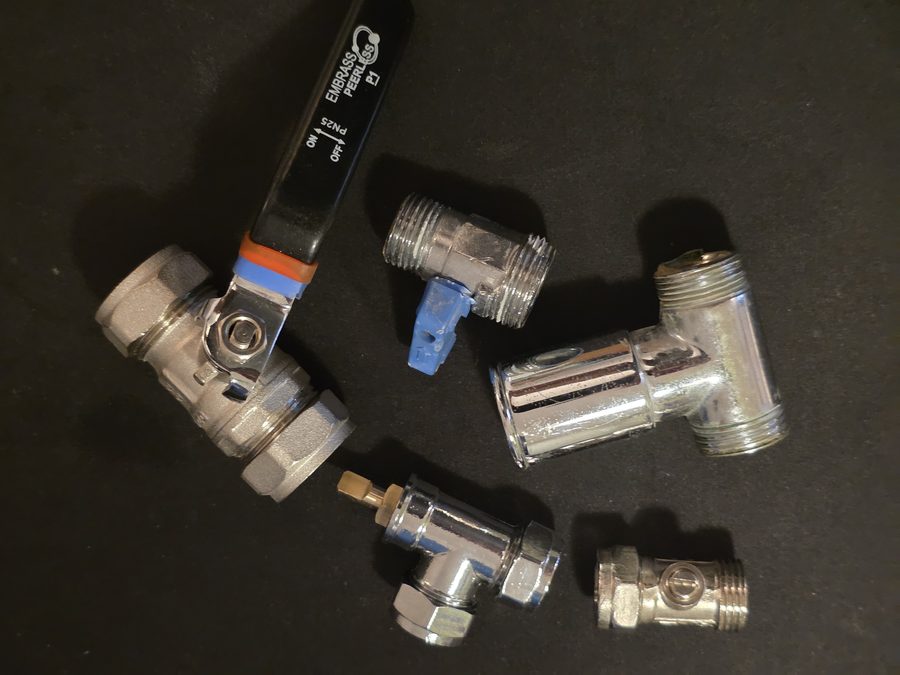
Selection of common plumbing isolation valves and service valves

Valve shapes vary

Lever valves, slotted valves and service valves all look different. The key is matching the valve to the pipe it controls.

Inside the property

Where to look first

  • Under the kitchen sink or behind the kickboard.
  • In a utility room, downstairs toilet or hallway cupboard.
  • Near the front door, under stairs, in a garage or cellar.
  • In flats, check the meter cupboard, service cupboard or shared riser.
  • Some properties do not have an internal stop tap, or the only internal valve may no longer work properly.
  • If the valve is painted, stiff, boxed in or leaking around the spindle, stop and call a plumber.

After shutting off

Reduce damage while you wait

  • Open the cold kitchen tap to drain pressure from the pipework.
  • For small slotted isolation valves, use a flat-head screwdriver and turn the slot across the pipe.
  • Move belongings away from the leak if it is safe.
  • Keep away from wet sockets, light fittings and consumer units.
  • Photograph the leak, valve and damage for your plumber, landlord or insurer.
  • Do not restart boilers or wet electrical items until they have been checked.

Heating leaks

If the leak is from a radiator or heating pipe

Combi boiler or sealed heating system

A sealed heating system has a limited amount of water in it. If a radiator or heating pipe leaks, the pressure will usually drop and the leak should slow down or almost stop once enough water has escaped.

  • If you can easily turn off a radiator valve near the leak path, do it. Stopping flow can help the system hold water, a bit like putting your finger over the top of a straw.
  • Many radiators have a lockshield valve at one end. This may need a small spanner or grips, so do not force it if you are unsure.
  • Do not keep topping up the boiler pressure while it is leaking.
  • If water is near electrics or the boiler, keep away and call for help.

Older tank-fed heating system

Some older systems have a small tank in the loft or cupboard that refills the heating through a float valve. These can keep feeding water into a leak, so turning off the mains water may be needed.

  • If you can easily turn off a radiator valve near the leak path, do it. This can slow the movement of water through the heating circuit.
  • Some radiator valves are lockshields and are not designed to be turned by hand.
  • Turn off the mains stop tap if the leak keeps running.
  • If you know which small tank feeds the heating, do not rely on it unless you are sure.

Portsmouth and Southsea

Who to call

Leaking tap, toilet, pipe, appliance valve or internal stop tap
Call Pompey Plumb on 07498 964 660.
Stop tap is seized, hidden, boxed in or leaking when touched
Do not force it. Send a photo or request an emergency visit.
Leak appears before the internal stop tap, outside, in a chamber or from the street
Contact Portsmouth Water as the local clean-water supplier for many Portsmouth-area properties.
No internal stop tap, or the street stopcock will not turn the water off fully
Contact the water company as an emergency. The street/company stop tap is normally their equipment, so they usually attend these issues without charging the customer.
Drain backing up, sewage, wastewater or sewer flooding
Contact Southern Water or a drainage specialist route, depending on the issue.
Tenant or rented property
Make the leak safe if you can, then contact your landlord or letting agent. Do not wait if active damage is continuing.

Still leaking or cannot find the stop tap?

Take a clear photo of the leak and the nearest valve if it is safe, then call or request an appointment.

Useful local links

Request Appointment Call  07498 964 660