After showering
Think failed silicone, loose tiles, shower screen leaks, tray movement, cubicle brackets, shower waste or pipework behind the valve.
Leak and water damage advice
Bath and shower leaks are often installation or sealing problems, not just failed pipes. The clue is when the leak appears: after showering, after bathing, or only when weight is on the tray.
Reviewed by Pompey Plumb Ltd. Last reviewed 24 June 2026.
Quick diagnosis
Think failed silicone, loose tiles, shower screen leaks, tray movement, cubicle brackets, shower waste or pipework behind the valve.
Think bath waste, overflow, taps, bath movement, screen position or water escaping around the bath edge.
A tray or bath that moves can break seals and open gaps. Support can matter as much as the visible silicone.
Stop using it until checked. In flats or converted houses, tell neighbours, landlords or managing agents quickly.
Photo guide
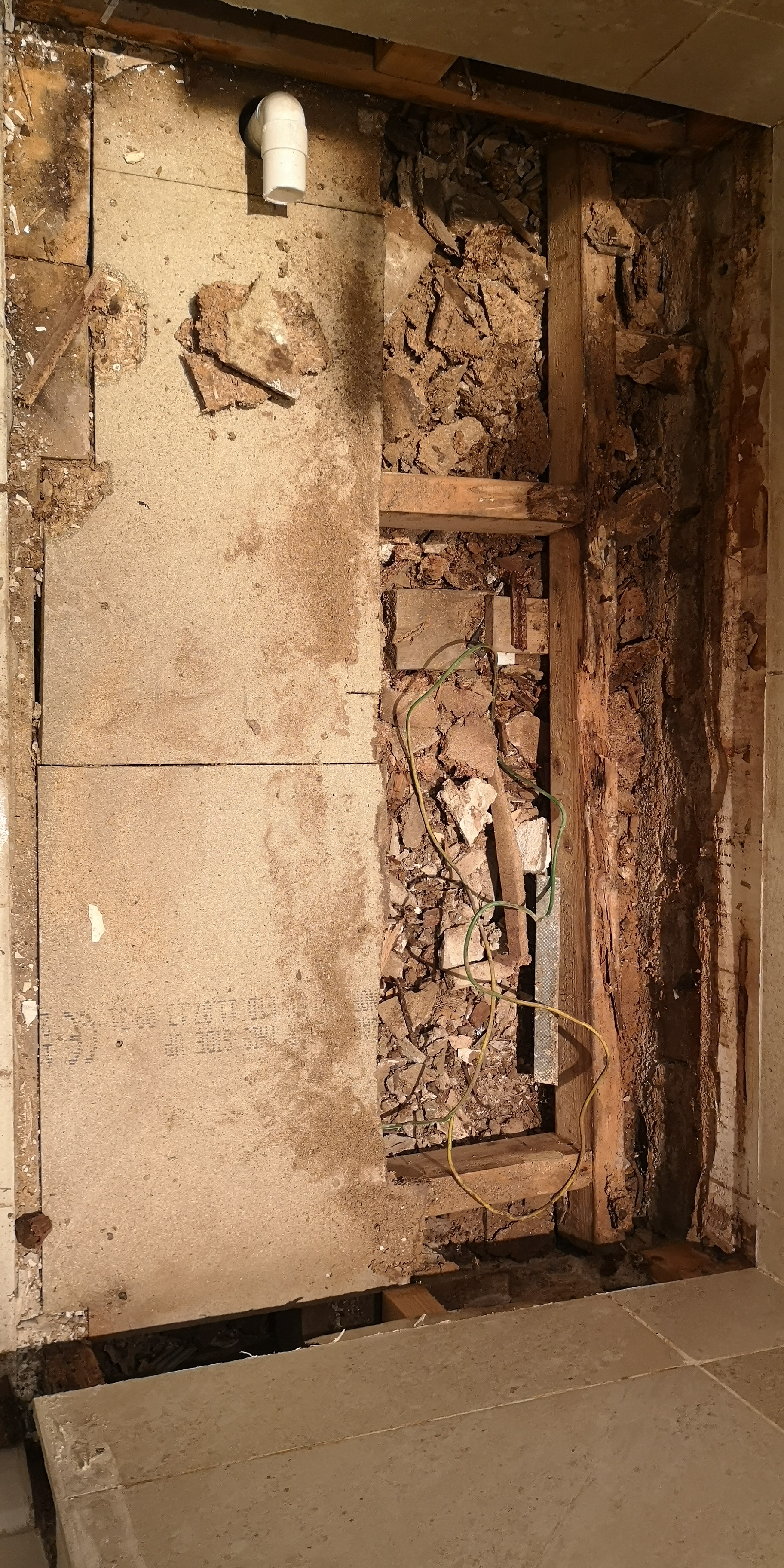
Damage around a shower tray can build up before water shows below. Tray movement and failed seals are common causes.
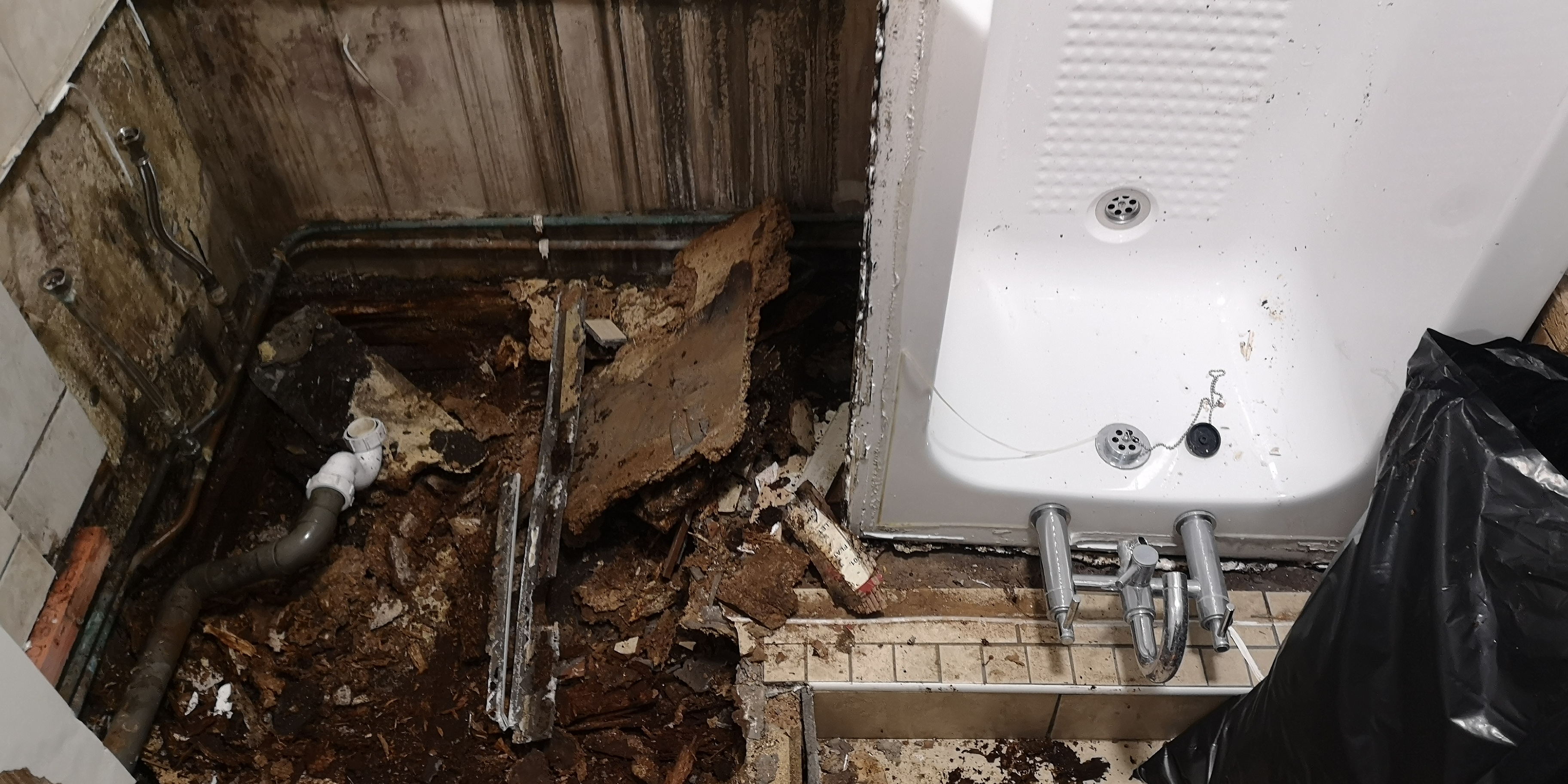
Bath wastes, overflows, shower screens and loose silicone can leak every time the bath or shower is used.
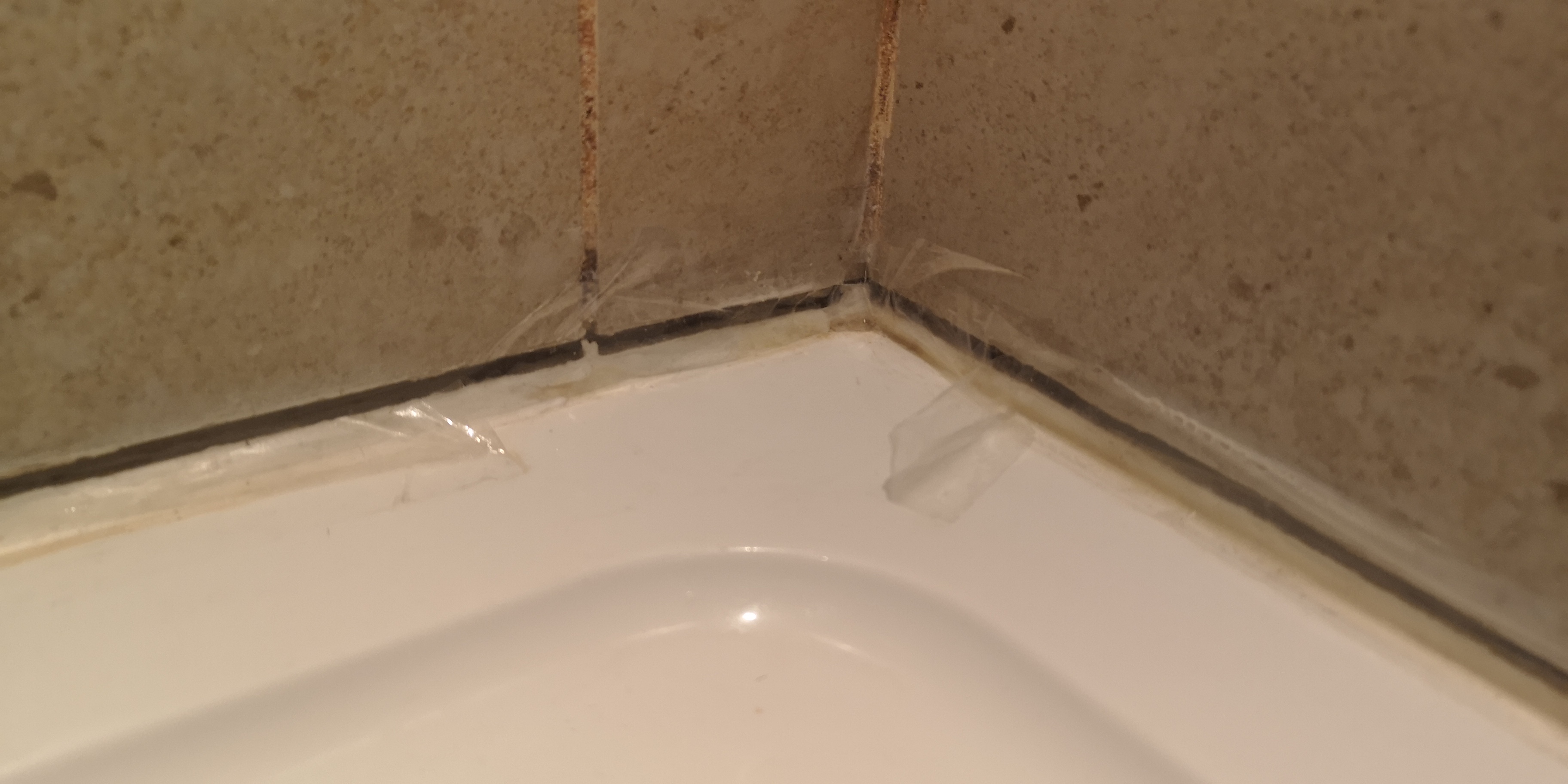
If a tray or bath flexes, the seal can fail repeatedly. Resealing alone may not solve the leak.
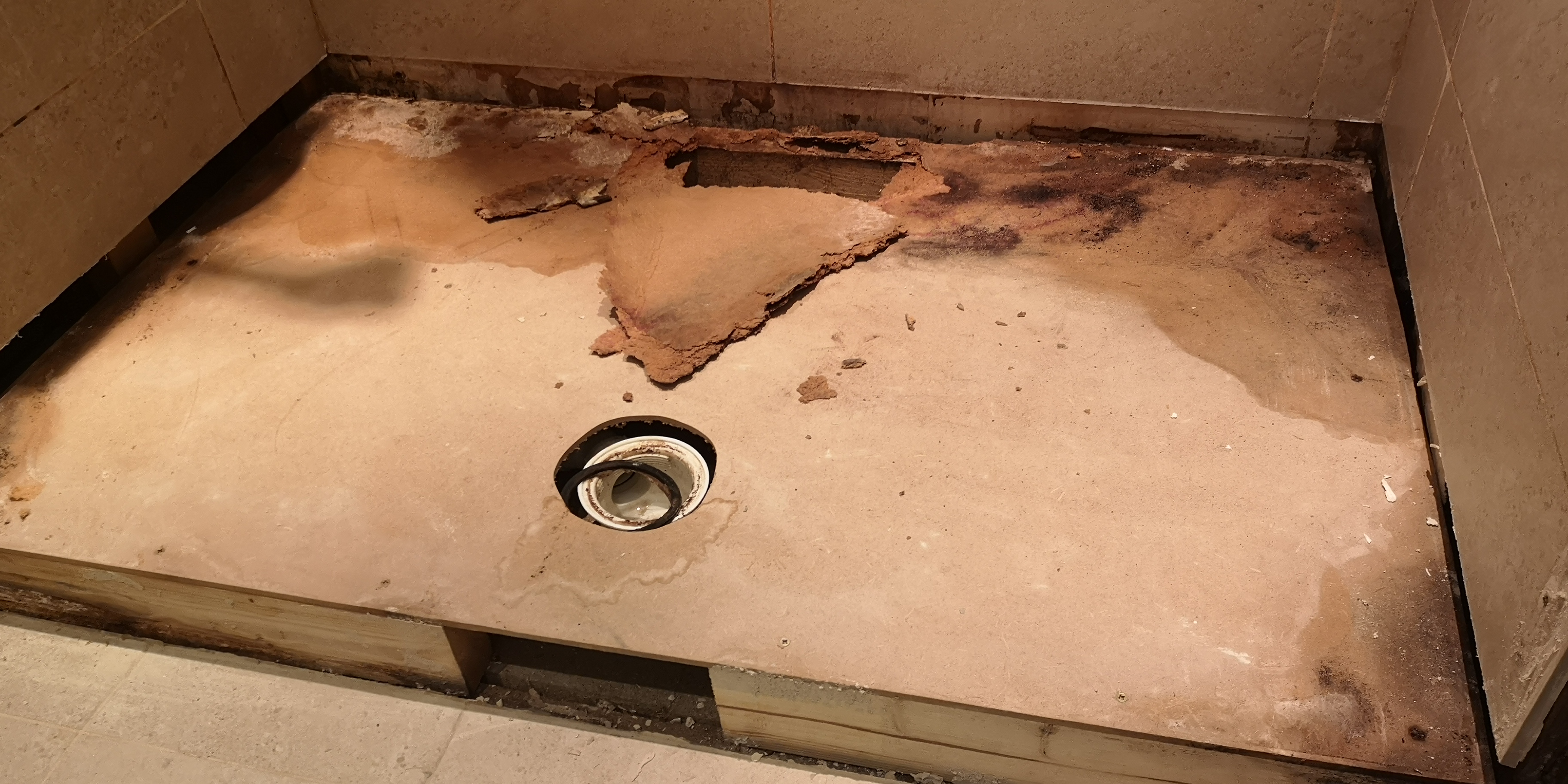
The visible leak may be small, but the damage below a tray or bath can be much larger once opened up.
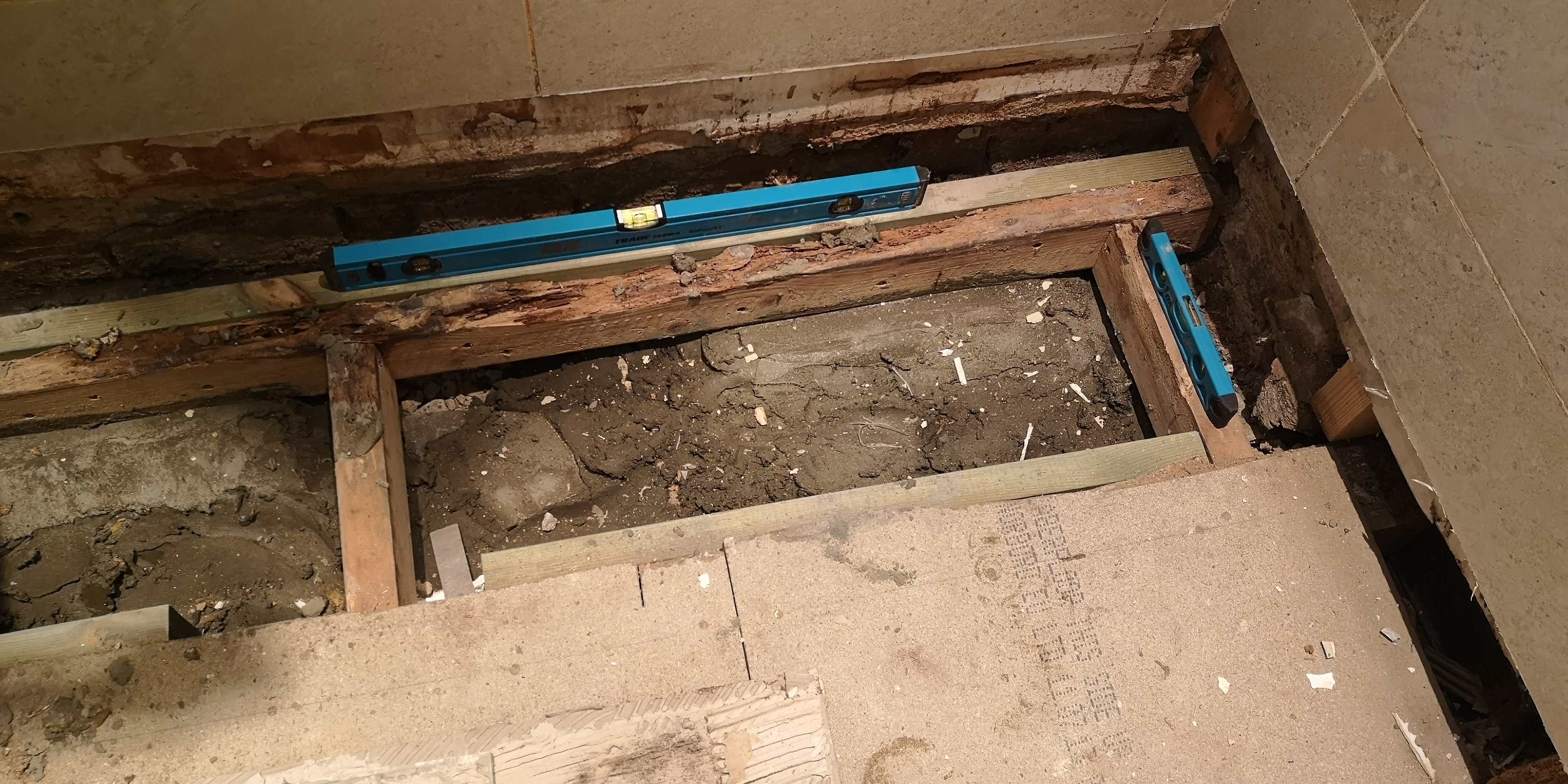
A proper repair may involve support, waste access, sealing and making sure the tray or bath cannot move.
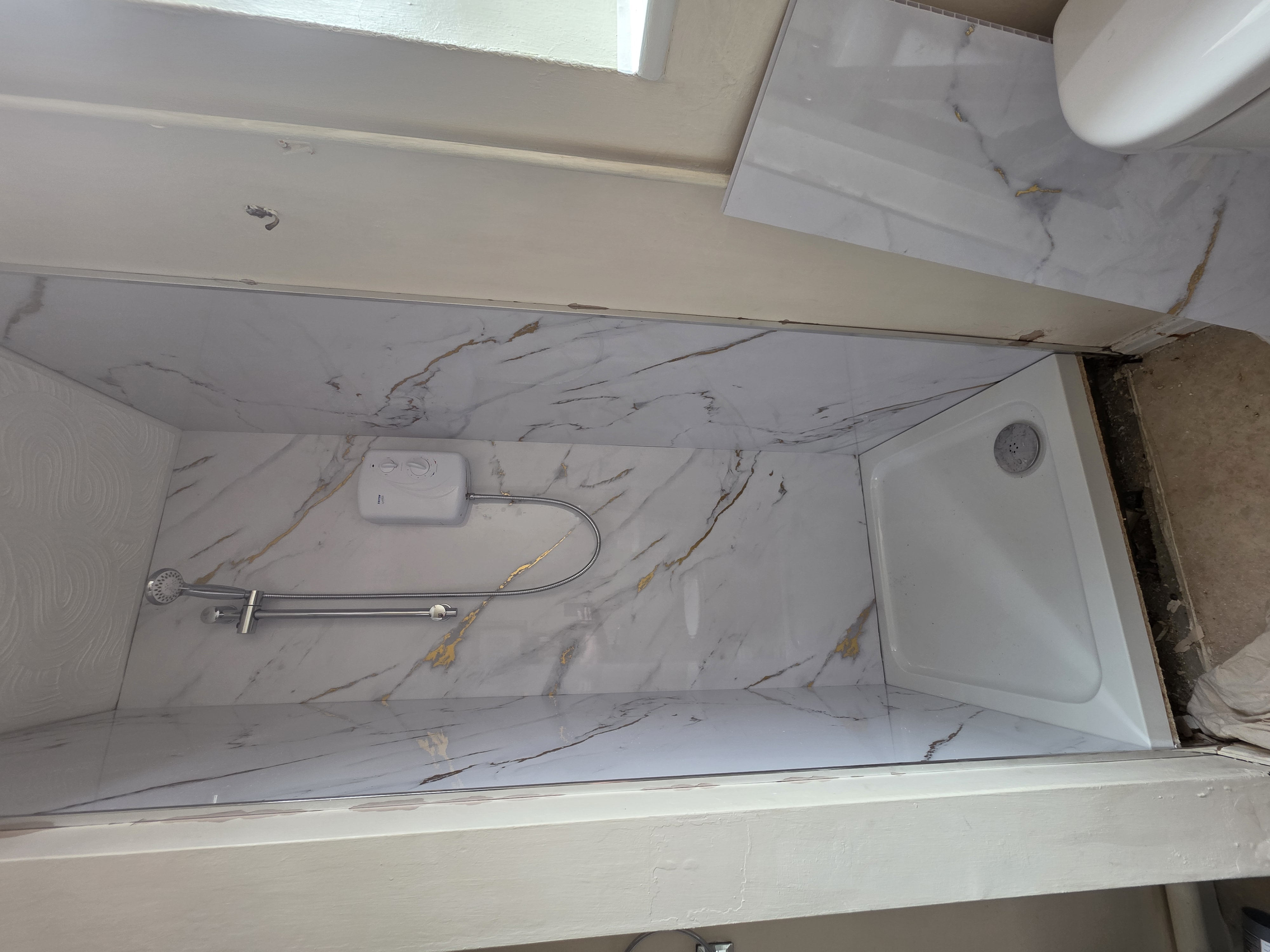
Water can pass through poor screen positions, unsealed brackets, badly fitted profiles or tired cubicle seals.
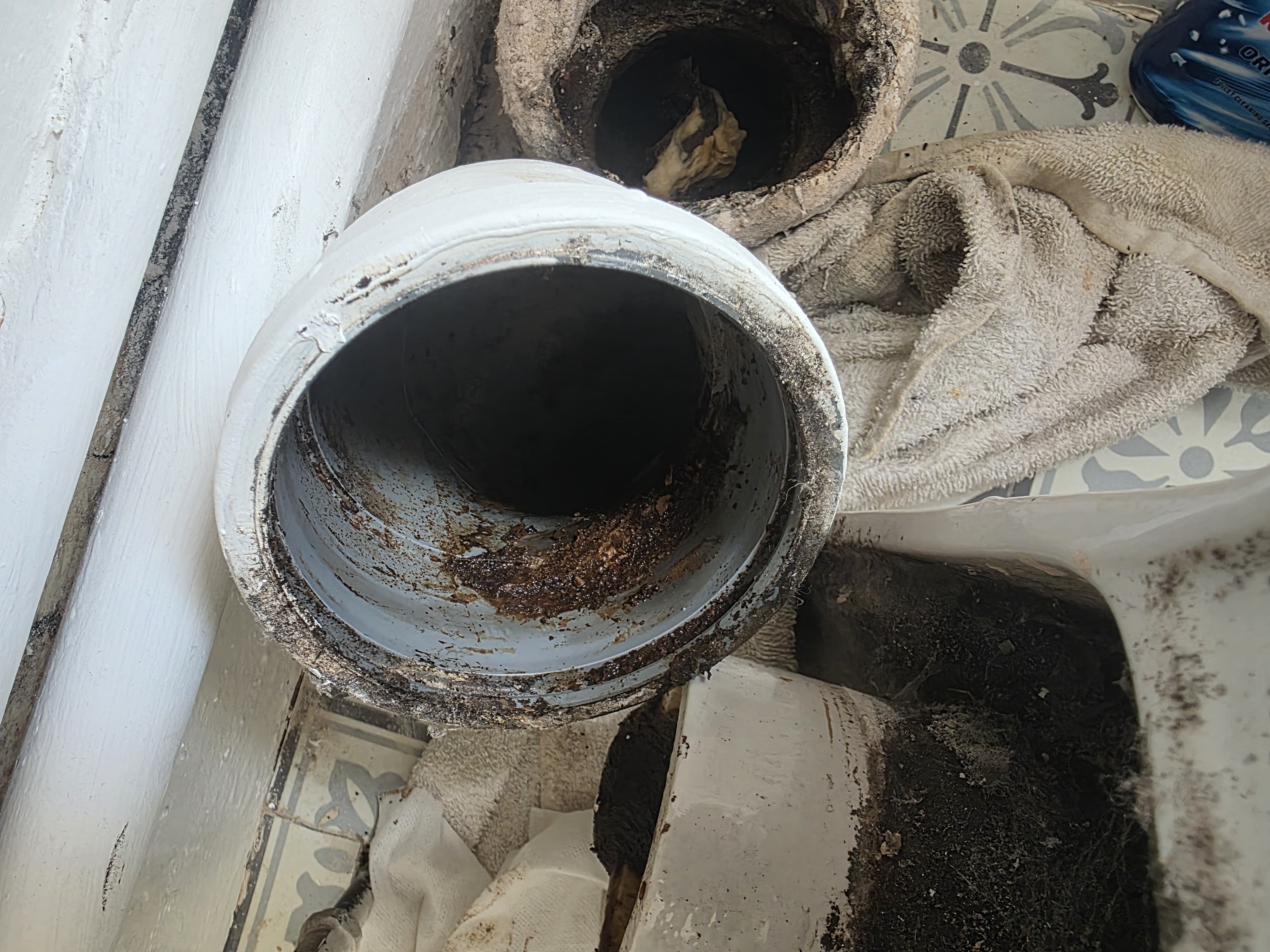
A missing or poor seal on a waste, trap or overflow can leak only when water is draining away.
The screen, tray, fall and splash area need to suit how the shower is used, not just look correct when dry.
Common causes
Screens and seals
Fresh silicone can help when the problem is only a tired seal. It will not fix a bath that moves, a shower tray without proper support, a screen in the wrong place or water tracking behind brackets.
Wastes and overflows
A bath or shower can look dry while in use, then leak when the waste pipe, trap or overflow is carrying water. This is why the timing of the leak is important.
Constant leaks
If a leak appears when the bath or shower has not been used, it is less likely to be splash water or a waste leak. It may be on the pressurised pipework feeding a tap, shower valve or bath filler.
What to do
Take photos of the damage, the screen, silicone, tray or bath edge, and the room below if affected, then call or request an appointment.